Your Goals
What do you want your privacy fence to do?
A privacy fence is defined by its purpose, not by a single material. Before choosing a style, it helps to be specific about what you want to change. Homeowners usually have one or more of these goals in mind:
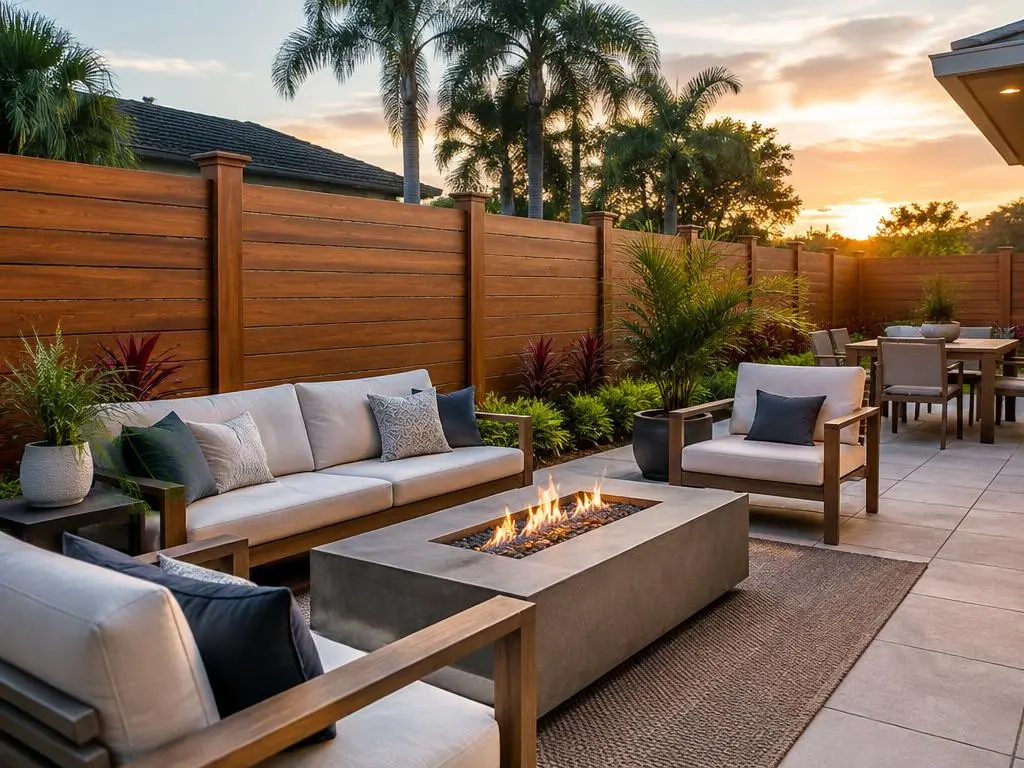
- A private backyard where you can relax, entertain or swim without feeling watched.
- Screening a view, such as a busy road, a neighbor's second-story window or a utility area.
- A safe enclosure for children and pets, with no gaps to see or squeeze through.
- A clearer sense of separation between properties in a closely spaced neighborhood.
Knowing which goals matter most helps decide how tall the fence should be, where it needs to be completely solid and where a more open design is fine.
Wood vs. vinyl privacy fences
Most privacy fences are built from wood or vinyl. Both can create a fully solid screen; they differ in appearance and upkeep.
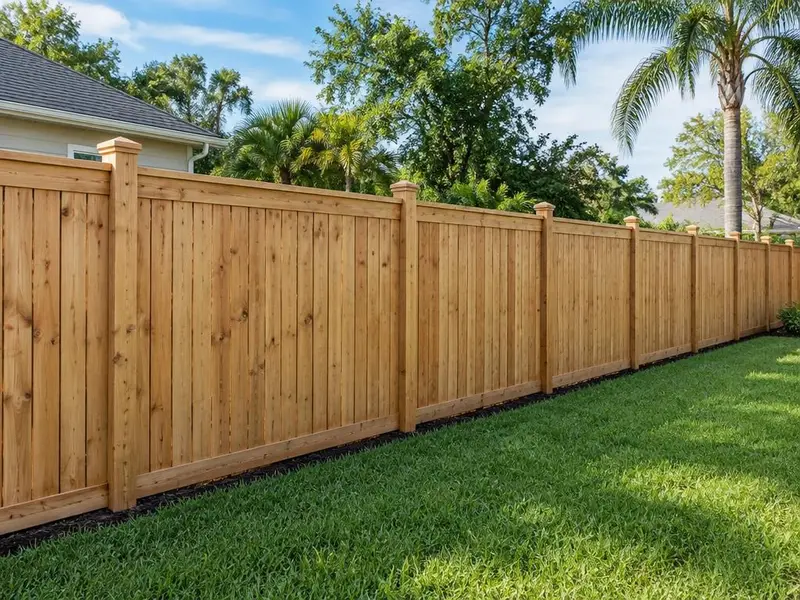
Wood privacy fencing
Wood offers a warm, natural look and a lot of design flexibility, including vertical boards, board-on-board layouts and horizontal styles. It can be stained or sealed to suit the home and adapts easily to slopes and irregular lot lines. In exchange, wood needs periodic cleaning and sealing or staining to look its best. Learn more about wood fencing.
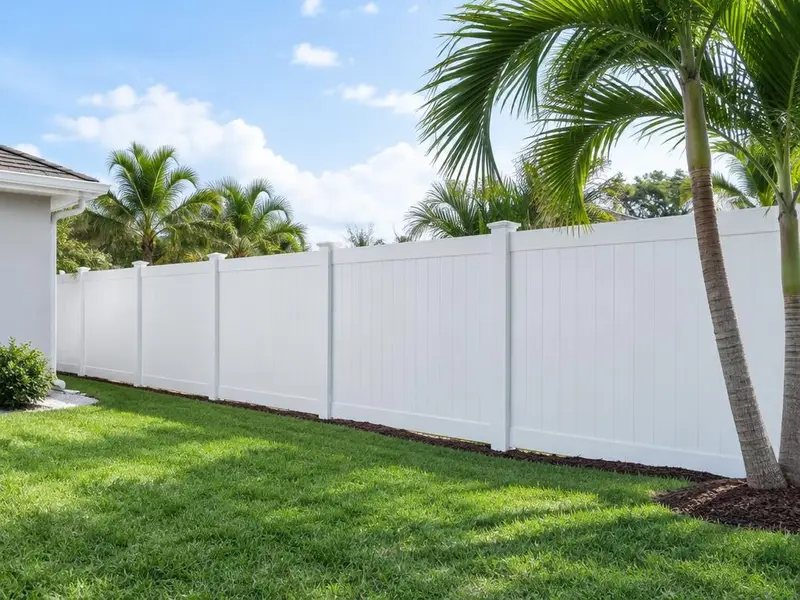
Vinyl privacy fencing
Vinyl privacy panels give a smooth, uniform, finished look and usually need little more than an occasional wash. They are popular with homeowners who want privacy without ongoing staining. Vinyl works best with standard panel layouts. Learn more about vinyl fencing.
Placement & Layout
Planning where the fence goes
Good privacy comes from thoughtful placement as much as from the material. A few things worth considering:
- Sightlines. Stand where you sit outdoors and notice where views come from. Those are the sections where height and solidity matter most.
- Property lines. Knowing where your boundary is helps avoid disputes. A survey is the most reliable reference.
- Utilities and drainage. Fence lines should account for utility locations, and the fence should not block the natural flow of water across the yard. Florida's 811 service marks underground utility lines before digging.
- Access. Plan gates for lawn equipment, trash bins and everyday foot traffic. See gate installation for more.
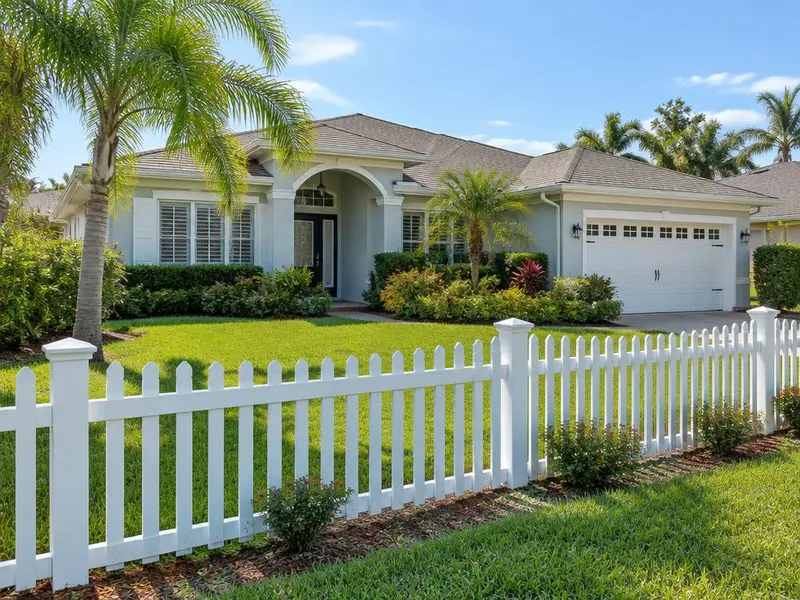
- Transitions. A privacy fence can step down to a lower or more open style toward the front of the property, where many neighborhoods limit height.
Height and property rules
Fence height is one of the most regulated parts of a privacy fence. Local zoning rules and many homeowners associations set limits on height, and some HOAs also specify allowed styles, colors or which side of the fence faces outward. Front-yard limits are often lower than backyard limits.
Permit requirements may depend on the property and project scope, so property owners should verify current requirements with Hernando County before beginning a fencing project. It is also wise to review your HOA documents before work begins.