The Basics
What is vinyl fencing?
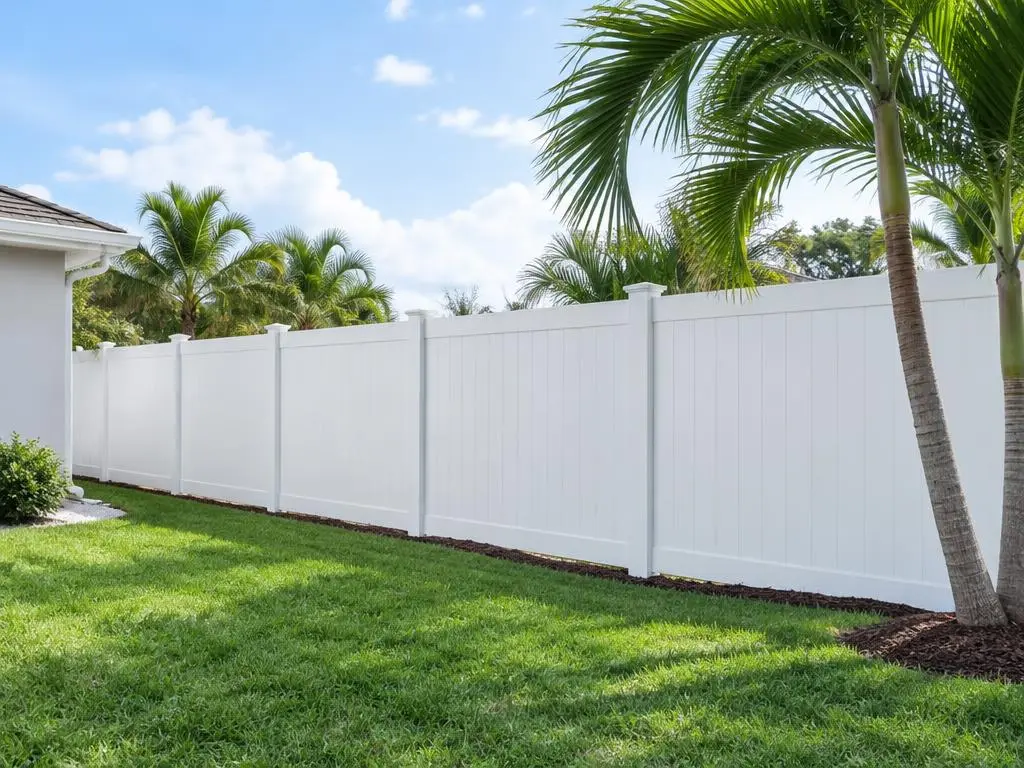
Vinyl fencing is made from polyvinyl chloride, which is why you will often hear it called PVC fencing. Instead of boards cut from timber, a vinyl fence is built from manufactured posts, rails and panels with a smooth, uniform surface. The color runs through the material rather than being painted on, so it does not need repainting.
Because it is manufactured, vinyl has a consistent look from one section to the next. That clean, crisp appearance is a big part of its appeal, especially on newer homes and in neighborhoods where a tidy, uniform streetscape matters.
Upkeep
The low-maintenance appeal of vinyl
Most homeowners who choose vinyl do so because they want a fence that does not need sanding, staining or sealing. In general, vinyl care comes down to:
- Washing the fence occasionally with water and a mild cleaner to remove dirt, pollen and mildew.
- Keeping sprinkler spray from leaving mineral staining on the panels.
- Trimming back plants that rub against the surface.
- Checking gates and latches periodically so they continue to close smoothly.
Florida humidity can encourage mildew on any surface, and vinyl is no exception, but it typically washes off easily. That makes vinyl a good fit for busy households and for owners of rental or seasonal properties who want a fence that stays presentable with little attention.
Vinyl for privacy, pets and family yards
Solid vinyl privacy panels block views completely, which is why vinyl is one of the two most common choices for backyard privacy alongside wood. Vinyl also has smooth surfaces without exposed splinters, which many families appreciate in yards where children and pets play.
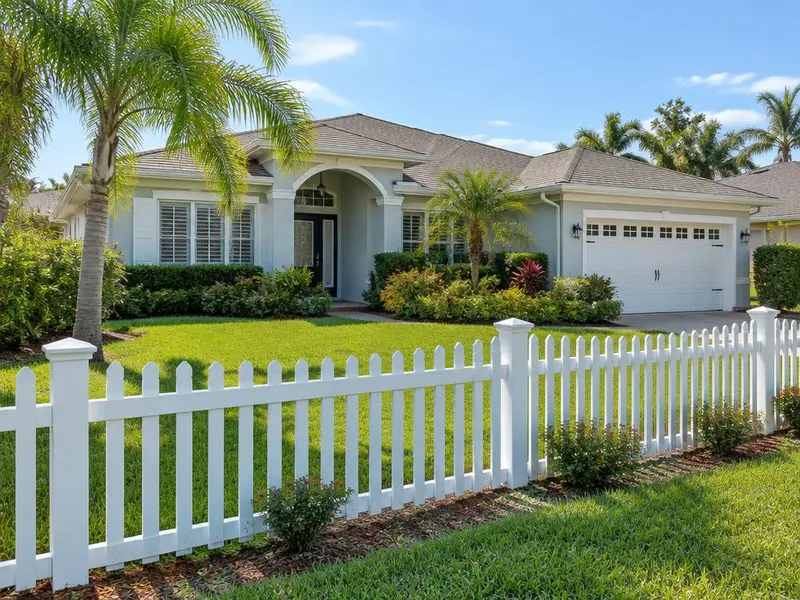
Vinyl is available in more than privacy styles. Semi-private designs with lattice tops and open picket styles are also common, so a single property can mix a private backyard enclosure with a lower, more decorative front-yard fence. If privacy is your top priority, compare options on our privacy fencing page.
Appearance
A clean, finished look
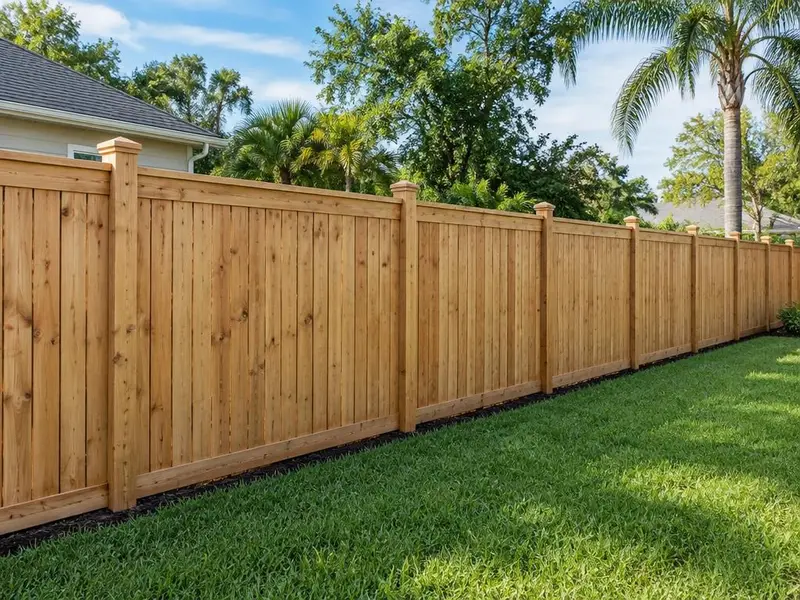
Where wood reads as natural and rustic, vinyl reads as tailored and finished. Crisp lines, matching post caps and consistent panels give a property a polished, cared-for look, and that appearance stays relatively consistent over time because there is no stain to fade or peel.
Vinyl colors and textures vary by manufacturer. When you request an estimate, we can talk through the options available for your project and how each would look against your home.
Vinyl vs. wood and aluminum
Vinyl sits between wood and aluminum: it can be fully private like wood, and low maintenance like aluminum.
Privacy
- Vinyl
- Full privacy available
- Wood
- Full privacy available
- Aluminum
- Open; keeps the view
Routine care
- Vinyl
- Occasional washing
- Wood
- Cleaning and sealing or staining
- Aluminum
- Occasional washing
Look
- Vinyl
- Smooth and uniform
- Wood
- Natural grain
- Aluminum
- Ornamental and open
Often chosen for
- Vinyl
- Low-maintenance privacy
- Wood
- Natural-looking privacy
- Aluminum
- Front yards and decorative boundaries
Prefer the warmth of natural grain? Read about wood fence installation. If you want to define the property while keeping the view open, the next material to consider is aluminum.