Why Wood
The look and privacy of a wood fence
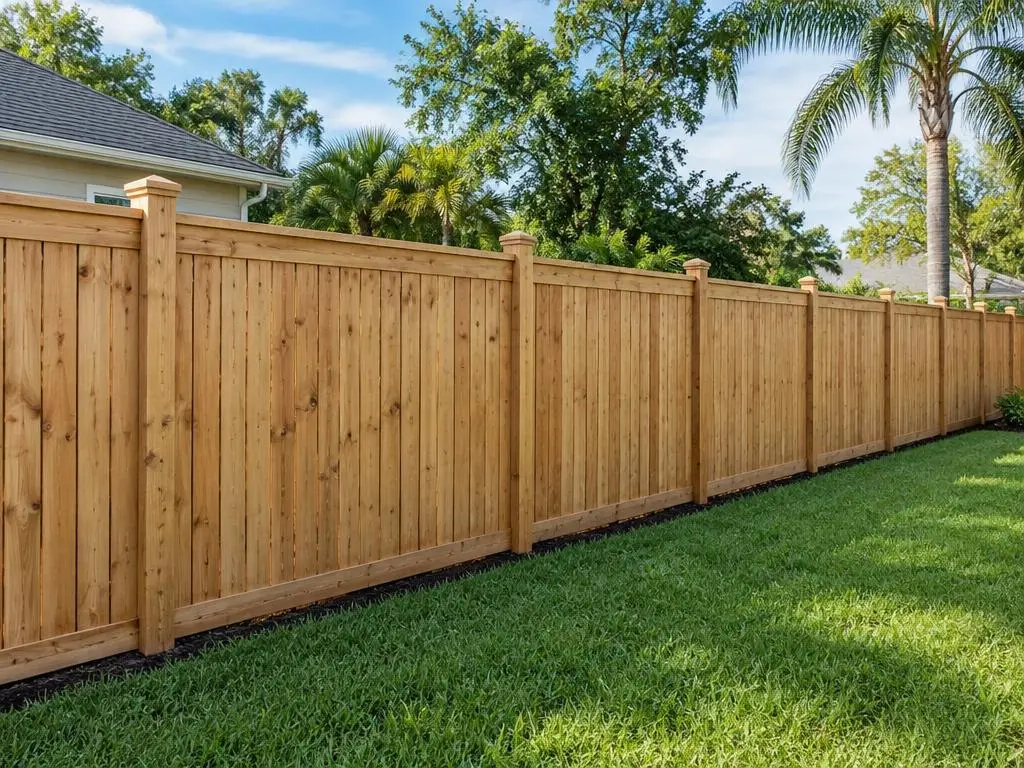
Wood has a warmth that manufactured materials work hard to imitate. The grain, the way boards weather and the option to stain or seal in a tone that suits the house all give a wood fence a natural, finished character. For many Florida homes, it simply looks like it belongs in the landscape.
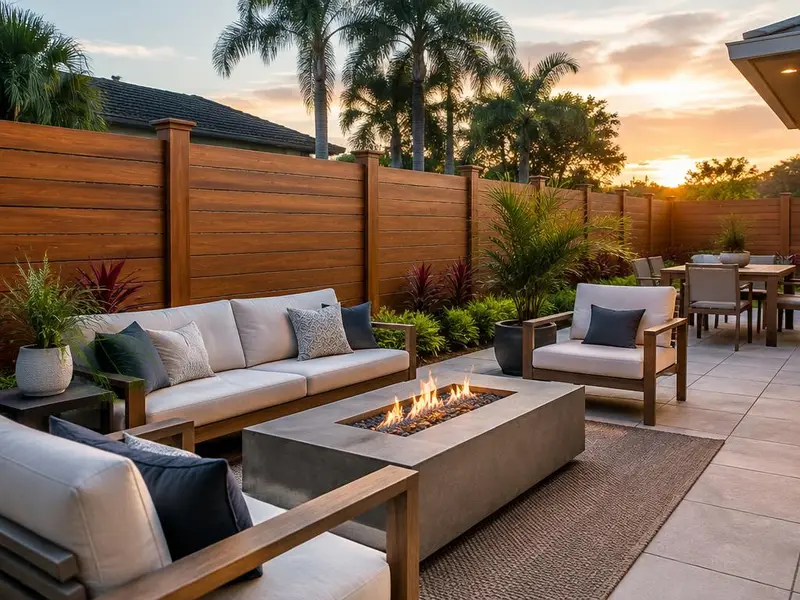
Wood is also one of the most flexible materials for privacy. Boards can be set tight together for a solid screen around a patio or outdoor living area, spaced for airflow, or run horizontally for a cleaner, more contemporary line. Because the design can change from one run to the next, a single property can have full privacy in the backyard and a lower, more open look along the side.
Where wood fencing works well
Wood tends to be the first material homeowners consider when the goal is a private, comfortable backyard. It is also a common choice when:
- You want a natural appearance that complements landscaping, mature trees and outdoor living spaces.
- Privacy matters more than visibility, such as around a patio, along a busy street or between close neighbors.
- You want to choose the finish, since wood can be stained or sealed and later refreshed to a different tone.
- The fence has to adapt to an irregular lot, a slope or a layout that changes direction often.
If the main goal is privacy and you are still deciding on a material, our privacy fence installation page compares wood and vinyl privacy options side by side.
Upkeep
Caring for a wood fence in Florida
Every outdoor material is affected by sun, heat, humidity and summer rain, and wood is the material where routine care makes the most visible difference. Left alone, most wood gradually weathers to a silver-gray tone. Some homeowners like that look; others prefer to keep the original color.
General care for a wood fence usually includes:
- Keeping sprinklers, soil and mulch from constantly wetting the bottom of boards and posts.
- Trimming back vines and shrubs that hold moisture against the fence.
- Cleaning off mildew or dirt as needed.
- Applying a sealer or stain periodically, based on the product used and how much sun the fence receives.
- Walking the fence line now and then to look for loose boards or leaning sections before they become larger problems.
None of this is complicated, but it is worth being honest about before you choose wood. If you would rather spend that time elsewhere, a lower-maintenance material may suit you better.
Wood vs. vinyl fencing
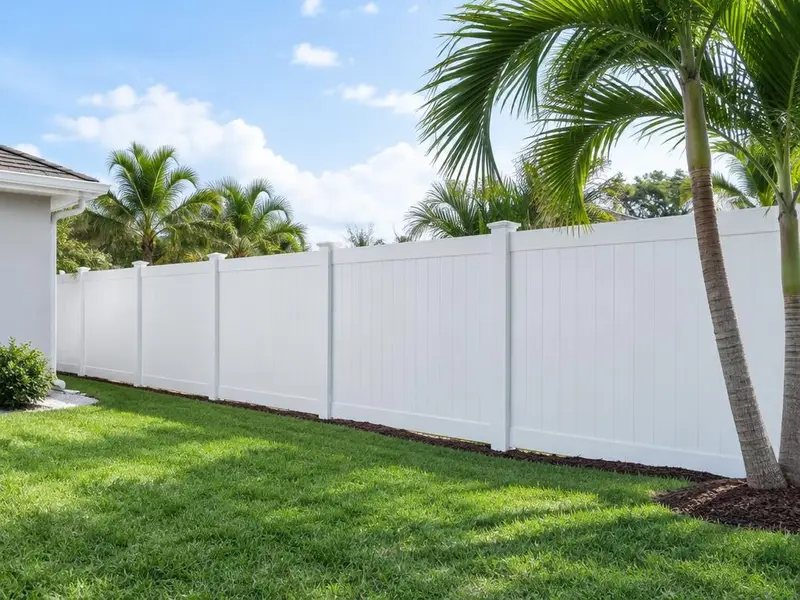
Wood and vinyl are the two materials homeowners compare most often, because both can create full privacy. The right choice usually comes down to appearance and how much maintenance you are comfortable with.
Appearance
- Wood
- Natural grain; can be stained or sealed
- Vinyl
- Smooth, uniform, clean finish
Privacy
- Wood
- Excellent with solid board layouts
- Vinyl
- Excellent with privacy panels
Routine care
- Wood
- Periodic cleaning and sealing or staining
- Vinyl
- Occasional washing
Design flexibility
- Wood
- Easy to adapt to slopes and odd layouts
- Vinyl
- Works best with standard panel layouts
Want the other side of the comparison? Our vinyl fencing page explains how vinyl is made and how it holds up to everyday use.
Before You Build
Planning a wood fence
A wood fence that looks right years from now starts with a few decisions made up front. During your free estimate, we will talk through:
- Height and layout — where the fence runs, how tall it needs to be for privacy, and where it should step down.
- Board style — solid privacy, spaced boards, or a horizontal design, and how each looks from both sides.
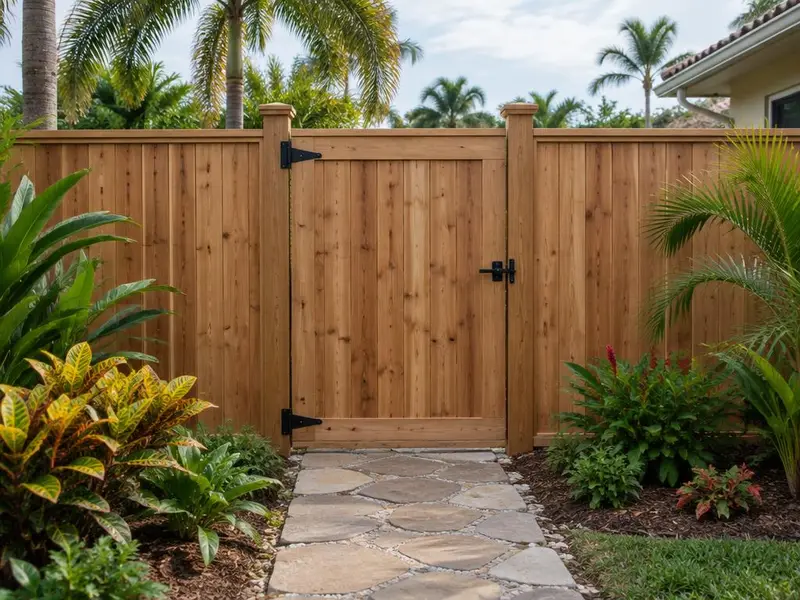
- Gates — how many you need, where you will walk through most often and whether equipment needs to fit. See gate installation for more on placement.
- Finish — whether you plan to leave the wood natural or apply a stain or sealer.
- Neighborhood rules — many communities have HOA guidelines on height, style or color, so it is wise to review them before work begins.