
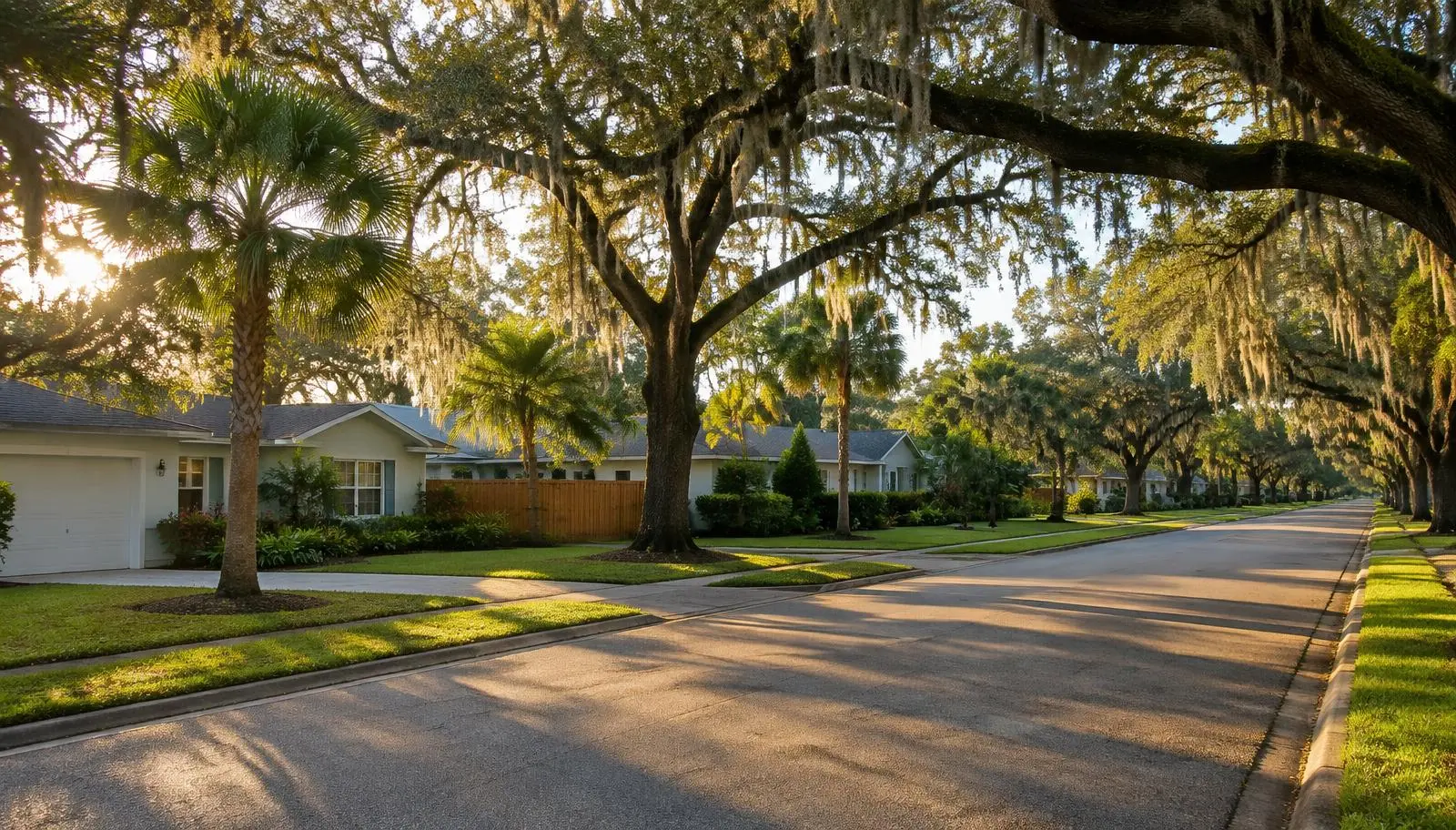
Fencing in Spring Hill, FL: A Local Guide
What to think about when planning a fence for a home or property in Spring Hill, Florida, from materials and privacy to climate and county rules.
About Spring Hill
A large, mostly residential community
Spring Hill is an unincorporated census-designated place in Hernando County, part of Florida's Nature Coast region and the Tampa–St. Petersburg–Clearwater metro area. It is one of the larger communities in the region: the 2020 U.S. Census counted 113,568 residents. You can read more about the community's background on Wikipedia.
Because Spring Hill is unincorporated, it is not a separate city. That means Hernando County is generally the place to check land-use and permit requirements before building.
A community of that size includes many kinds of properties, and fence needs differ a lot from one to the next: a backyard on a neighborhood street, a corner lot, a larger parcel and a commercial site all call for different thinking.
Planning
Planning a fence in Spring Hill
A little preparation goes a long way. Before choosing a material or style, work through these steps:
- Define the goal. Privacy, pets, a clear boundary, appearance or security. Most properties have more than one.
- Confirm your property line. A survey is the most reliable reference, especially on shared boundaries.
- Check the rules. Permit requirements may depend on the property and project scope, so property owners should verify current requirements with Hernando County before beginning a fencing project.
- Review HOA documents. Many neighborhoods have their own guidelines for fence height, style, color and placement, and may require approval in advance.
- Locate utilities. Florida's Sunshine 811 service marks underground utility lines before digging, which is an essential step for any fence that involves setting posts.
- Plan access. Decide where gates need to go for daily routes, lawn equipment and trash bins.
Materials
Choosing a fence material
Four materials cover most residential and commercial fencing. Each has a distinct character:
Wood
Warm and natural, with excellent privacy and plenty of design flexibility. Wood needs periodic cleaning and sealing or staining to look its best. Learn more about wood fencing.
Vinyl
Clean and uniform, available in privacy, semi-private and picket styles, and generally needs only an occasional wash. Learn more about vinyl fencing.
Aluminum
Ornamental and open, it defines a property without hiding it, and the metal does not rust the way iron does. Learn more about aluminum fencing.
Chain link
Practical and cost-conscious, often used for pets, larger yards and commercial perimeters. Learn more about chain link fencing.
Privacy & Use
Privacy and how you use your property
Where homes sit fairly close together, backyard privacy is one of the most common reasons to build a fence. Before deciding how tall and how solid a fence should be, spend a few minutes where you actually sit outdoors and notice where views come from. Those sightlines tell you which sections need full privacy and where a lower or more open design is fine.
Think, too, about how the yard is used day to day: where children play, where pets roam, where equipment is stored and where you walk most often. A fence that supports those routines, with gates in the right places, is easier to live with than one designed only for looks. Our privacy fencing page goes deeper on height, placement and comparing wood and vinyl.
Climate
Sun, humidity and weather
Spring Hill's climate is part of the fence conversation. Strong sun can fade and dry outdoor materials over time. Humidity and frequent summer rain encourage mildew and keep the base of a fence damp. And the Atlantic hurricane season, as defined by NOAA's National Hurricane Center, runs from June 1 to November 30 each year.
No fence material is immune to weather, but some practical habits help any fence last:
- Keep sprinklers from spraying the same section of fence every day.
- Keep mulch and soil from piling up against posts and boards.
- Trim vines and shrubs that trap moisture against the fence.
- Wash vinyl and aluminum occasionally, and seal or stain wood as needed.
- Walk the fence line after a major storm to check for leaning sections, loose pieces or damage from fallen limbs.
If a storm or simple age has left a fence in rough shape, our page on fence repair explains how to weigh repair against replacement.
Homes
Residential considerations
For homeowners, the front yard, backyard and side yard often call for different approaches. Front-yard fences tend to be lower and more decorative, and are often subject to stricter height rules. Backyards are where privacy usually matters most. Side yards connect the two and are usually about gates and screening utility areas. Many homes combine materials, such as an ornamental front fence with a privacy fence behind. Our residential fencing page covers these choices in more detail.
Commercial Properties
Commercial and property-boundary considerations
Commercial properties have different priorities: defining perimeters, enclosing storage and equipment, separating customer areas from service areas and presenting a professional appearance from the street. Access planning matters most, since gates need to accommodate delivery and service vehicles as well as foot traffic. See commercial fencing for a closer look.
For larger or rural parcels, the main questions are usually how much fence is needed, which areas truly need to be enclosed and which material offers the right balance of cost and durability across longer runs.
Sources
Local facts on this page come from the sources below. Rules and requirements can change, so confirm current details with the relevant agency.